
American Principles Project · 2019
Family First: Reclaiming the GOP’s Forgotten Constituency

A Tale of Two Elections
Two elections, two very different results: In 2016, Donald Trump won the White House by forging a new coalition that included more blue-collar Americans in Rust Belt states. Trump’s populist-themed campaign was a bold one, and it seemed to lay the foundation for further electoral success. However, in the subsequent 2018 midterms, the Republican Party lost massive ground, despite a surging economy and after passing one of the largest tax cuts in modern memory. Even more shocking was where the GOP lost — primarily in wealthy suburbs, whose voters likely benefited the most from the party’s economic agenda.
So what should conservatives conclude about how to build a winning national political coalition from these last two elections?
The temptation among some Republican elites will be to blame President Trump — to cling to the vastly improbable assumption that a Mitt Romney or Jeb Bush at the helm would have, through their focus on traditional Republican economic policies and winsomeness of personality, pushed the GOP to victory in 2018.
However, as we argued in our 2013 report, Building a Winning GOP Coalition, this standard Republican strategy relying on an economic message of tax cuts and “job creation” is a recipe for political failure. Developments since then have only strengthened our case. For example, recent polling from the Heritage Foundation shows that, even amid our current booming economy, more than 45 percent of voters in battleground states — and a majority of voters in nine swing districts which voted for Trump in 2016 — believe the Republican economic agenda of tax cuts and de-regulation has actually hurt the middle class.
And, as mentioned above, those who have benefited the most from the GOP’s economic policies are increasingly leaving the party. In fact, as of the current Congress, 43 of the 50 wealthiest House districts are now represented by Democrats.
So where does the Republican Party go from here? What lessons should President Trump and the GOP take from the last election in charting a path forward for the next one? In order to answer these questions, some additional evidence will be useful.
In November 2018, the American Principles Project commissioned a nationally representative poll of 5,285 Americans aged 20-65. We asked them about their votes in the 2016 and 2018 elections and also about their faith in the value of the free market and their views on abortion and marriage.
From their answers, we discovered one crucial detail about the electorate which has been almost entirely overlooked in recent political discussion: one of the strongest indicators of holding conservative views and supporting GOP candidates — across race, gender, and income level — was being married and/ or coming from an intact family. In other words, married and family-oriented voters are a crucial, and likely the most crucial, component of the GOP coalition.
For Republicans looking ahead to 2020, this point is of the utmost importance.

Rather, the Republican Party’s future is wholly dependent on a renewal of the American family, and it is on this goal that conservative leaders should be fully focused moving forward.
American Principles Project
Surveying America in 2018
Fielded immediately following the midterm elections, the 2018 American Political and Relational Behavior (APRB) Survey — conducted by the Austin Institute on behalf of the American Principles Project — collected data on a wide range of issues. In addition to asking respondents about their political affiliation and voting behavior, the survey also gathered information on their attitudes on a myriad of economic and social issues as well as numerous details on their marital and family history.
What we found was at once intuitive and yet remarkable: being married and coming from an intact family is significantly related to one’s political activity and views.
Let’s begin with the former — among the 20-65 age group, President Trump and Republicans performed far better among married voters than those with almost any other marital status. Although our survey indicated Trump lost this age group overall to Hillary Clinton, his deficit among married voters was only 1.6 percentage points.
In 2018, Republicans once again performed even worse in every category.
But not only are married voters among all classes, races, and genders more likely to vote Republican — they are also more likely to vote period. Over 80 percent of married respondents in our survey said they voted in the 2016 election and 76 percent said they voted in 2018, the highest figures in both elections among all marital status groups. By comparison, in 2018, only 71 percent of divorced respondents and only 61 percent of cohabiting and never married respondents said they showed up at the ballot box.
Moreover, over 81 percent of married respondents said they planned to vote in 2020, while only 77 percent of divorced, 68 percent of cohabiting, and 66 percent of never married respondents said the same.
Beyond voting behavior, however, there is also a distinct relationship to be found between marital status and attitudes on various issues. For example, in our survey we asked respondents to rank where they stood between conservative and progressive views on a number of economic issues, including the value of free markets, government regulations, taxation, and income differences.
On social issues, the story was the same. Naturally, married respondents were far more likely than their counterparts to oppose the idea that “marriage is an outdated institution” — 74 percent of them disagreed with this statement, while only 51 percent of never married and 46 percent of cohabiting respondents similarly did so. In addition, 33 percent of married respondents expressed clear opposition to abortion rights, a higher proportion than was found among divorced (29 percent), never married (24 percent), or cohabiting (15 percent) respondents.
And on the question of whether adolescents should be given hormones or surgery to transition to the opposite gender if they identify as such, married respondents were once again the most conservative group. (Notably, cohabiting respondents were the only group more likely to agree than disagree that children should be allowed to transition.)
As with voting behavior, the effects of intact marriages on parents also appear to carry over to their children.

Communities where marriages and families are flourishing are likely to be places where both economic and cultural conservatism thrive.
American Principles Project
However, despite the seemingly obvious nature of these observations, in recent years this reality hasn’t factored very heavily in GOP election strategy. In fact, for far too long many Republicans have been focused on the wrong political paradigm, chasing the unicorn of “socially liberal, fiscally conservative” suburban voters who research has shown are virtually non-existent. Indeed, our own survey shows that the proportion of respondents who reported being politically liberal and also supporting free markets was a measly 2 percent.
It’s clear that GOP leaders need to instead adopt a new strategy — one which puts an emphasis on the socially conservative and economically pro-family policies which are likely to appeal to the current Republican base as well as attract new family-oriented voters, particularly minority voters, who don’t normally vote Republican but otherwise agree on these issues.

Building on the Trump Coalition
1 Trump refused to adopt a “truce strategy” on social issues, instead using social conservatism to his benefit.
One of the few prominent Republican leaders to date who appears to have grasped both the political realities of the present moment as well as the opportunities available to the GOP is the President of the United States. Donald Trump won the White House in 2016 not by sticking to the standard Republican playbook but rather by embracing an entirely new platform which appealed directly to many of the voters described above.
In particular, Trump did two things which helped him to build a winning coalition (coincidentally, the very two things which we recommended in our 2013 Building a Winning Coalition report).
Unlike Mitt Romney’s doomed 2012 campaign which took pains to deemphasize Romney’s position on social issues, Trump in 2016 recognized the potent appeal of social conservatism to a large portion of the electorate and acted accordingly. In the lead up to Election Day, for example, he made an unprecedented pledge to pro-lifers, vowing to defund Planned Parenthood, sign the 20-week Pain Capable Unborn Child Protection Act, and nominate pro-life justices to the Supreme Court.
Meanwhile, the Democratic Party since 2016 has opened the door even further for Republicans by lurching to the extreme left — especially on cultural issues.
Sensing a potential danger to Roe v. Wade, Democrats in states including New York, Vermont, and Illinois have moved to officially legalize abortion up until the moment of birth, while Democrats in Maine enacted a law allowing taxpayer funding of abortion through Medicaid.
In a rare moment of candidness about the true nature of these laws, Virginia’s Democratic Governor Ralph Northam explained to an interviewer that under such laws, if a woman in labor wished to have an abortion, “[t]he infant would be delivered. The infant would be kept comfortable. The infant would be resuscitated if that’s what the mother and the family desired, and then a discussion would ensue between the physicians and the mother.”


And beyond mere labels, Americans’ views on when abortion should be legal also moved even further away from the official Democrat position. Already in January, a combined 75 percent of respondents had stated that abortion should be legally restricted to the first three months or even further, a far cry from the official Democratic Party view. By February, that number had ticked up to 80 percent. Moreover, 64 percent of Democrat respondents in the latter poll said they supported such abortion restrictions, as did 83 percent of independents.
And a remarkable 48 percent of Democrats said they agreed with bans on abortion except for cases rape, incest, or to save the life of the mother, or that they did not think abortions should ever be permitted.
Unpopularity with the Democratic Party’s positions extends to LGBT issues as well. A May Rasmussen poll, for example, showed that half of Americans oppose “allowing transgender students to use the bathrooms of the opposite biological sex” versus only 31 percent support.
Indeed, given the fawning attention LGBT issues typically receive in the media and entertainment industries, it was even more shocking to see the pro-LGBT organization GLAAD admit that its 2019 polling found a decrease in LGBT acceptance among 18-34 year olds for the second straight year, falling from 63 percent in 2017 to 53 percent in 2018 and 45 percent this year.
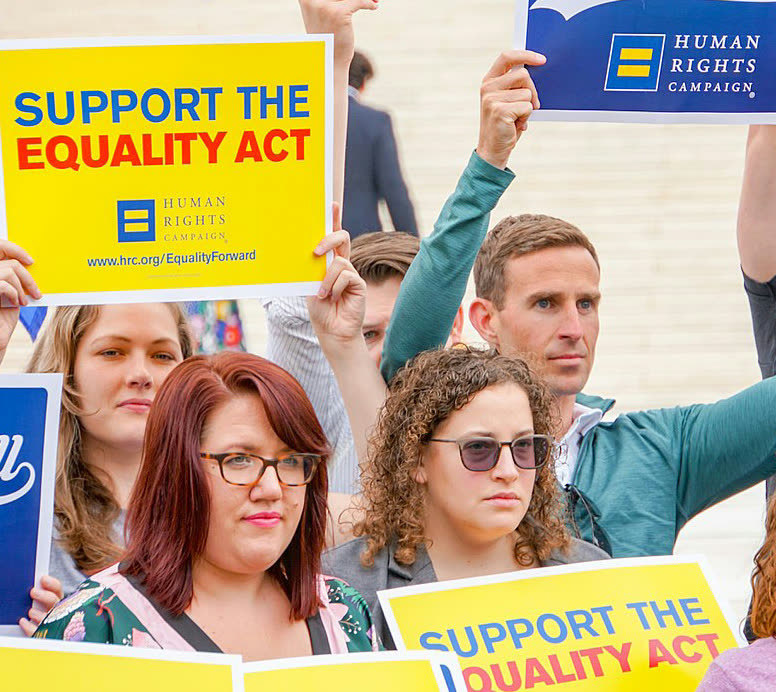
But while GLAAD was quick to indict the “discriminatory policies and targeted rhetoric” of the Trump administration for the change, it is just as easy to imagine that the publicity brought by the Democrats’ own efforts to advance far-left policies such as the Equality Act might also be to blame.
In short, this confluence of the new direction opened by Donald Trump’s pioneering 2016 campaign and the increasingly leftward plunge of the Democratic Party has created an enormous opportunity for Republicans in 2020. There are large numbers of family-oriented Americans open to a socially conservative, economically pro-worker message, as Trump’s victory illustrated, and in the time since then, Democrats have only made it easier to draw the contrast. By taking Trump’s successful 2016 formula and reemphasizing its strongest points, Republicans stand an excellent chance of replicating that election’s result.
But even more importantly, a platform combining social conservatism and pro-family economics promises to offer Republicans a far greater benefit than a mere short-term electoral victory. That’s because these policies, if successfully enacted, aim toward reversing the breakdown of the American family over the long term — by overturning the progressive social agenda which has had a corrosive effect on traditional mores and institutions which encourage family formation and by eliminating economic obstacles which have made marriage and childrearing a financial near-impossibility for many Americans.
A “Family First” Agenda for 2020
So what would such a “Family First” platform look like concretely?
On cultural issues, Republicans need to recognize and articulate the serious threat which progressive social policy presents to the family and also be able to offer a positive vision of how social conservatism is at its root directed toward strengthening American families and communities. And on economic issues, Republicans need to completely change their traditional reference point.
Rather than prioritizing the interests of “job creators” (i.e. businesses) and emphasizing abstract measures of economic production like Gross Domestic Product (GDP), Republican candidates must instead outline a vision that prioritizes the needs of working families and focuses on alleviating the greatest financial obstacles to family formation.
The good news is that the GOP already embraces, at least to some degree, many ideas which can be packaged into a compelling platform for family renewal. We have collected what we believe to be the most important of these ideas below.
Parental rights
The ongoing fight over parental rights embodies the core difference between progressive and conservative ideology: whether the family is prior to government, or subject to it. Parents have a natural right and corresponding responsibility to direct the care and upbringing of their children. However, the threats to this fundamental right are myriad and growing most prominent in education and healthcare, as many progressive institutions and activists have decided they know better than parents how to raise their children.
Indeed, the left is actively weaponizing the state and the courts in many areas to step between parents and their children in order to “properly educate” children in socially liberal orthodoxy. In order to combat these trends, Republicans should consider adopting the following positions:
Support a federal Parents’ Rights Act explicitly stating that parents have a fundamental right to direct the care, education, and upbringing of their children — not the state.
This legislation would put a thumb on the scale for parents across the country facing egregious family rights violations by the courts and leftist-dominated institutions.
Education
In addition to the parental rights issues we face in our current education system, families are also dealing with systematic attempts to put their children into a one-size-fits-all box. Through projects like Common Core, the federal government (under progressive influence) has tried to impose failed education theories on all schools, creating a mess of dumbed-down curriculum across the public school system. Moreover, Republicans have long been divided on the issue, likely explaining at least in part why Education Secretary Betsy DeVos has made relatively little progress in resolving this problem since her appointment in 2017.
As a result, GOP candidates should consider adopting the following positions:
Support school choice initiatives, giving parents the freedom to explore better education alternatives for their children, such as private charter schools, religious schools, and homeschooling.
This is especially important for lower and middle income parents who otherwise could not afford quality education for their children.
Support expanding 529 tax-advantaged savings accounts, allowing parents to use them for homeschooling and a wide variety of costs related to K-12 public or private education.
Abortion
The legalization and mass proliferation of abortion since Roe v. Wade, often promoted and/or funded by government entities, has devastated the American family. Indeed, the evidence for this was clear as far back as 1996, when the future Federal Reserve Chair Janet Yellen along with two colleagues authored a paper arguing that the decline of marriage rates and explosion in out-ofwedlock births since the 1970s can be tied primarily to the widespread legalization of abortion and contraception. Thus, addressing the issue of abortion ought to be a crucial component of any pro-family agenda.
Republicans should consider adopting the following positions:
Support laws which recognize that children in the womb have a right to life.
Polls show that legislation barring late-term abortions, such as the Pain-Capable Unborn Child Protection Act, have especially high support among voters.
Oppose government funding of Planned Parenthood, which has played a central role in spreading the scourge of abortion and its effects nationwide.

Pornography
Since 2016, fifteen states have passed resolutions declaring pornography a public health crisis. They have plenty of reason to, given that there is a large body of research linking pornography use to a host of negative effects including sex trafficking, sexual exploitation, increased sexual violence against women, addiction, harmful impacts on male sexual health and relationships, and an increase in early sexual activity among children. The ready availability of pornography through our increasingly tech-connected world presents families with a challenge that our own parents and grandparents never had to face.
Given this new reality, it is of great interest to society that we recognize it as a public health crisis and address it as such. Republicans should consider adopting the following positions:
Support empowering the FTC to require in-ternet service providers give all households by default an “opt-in” option to receive obscene content, as opposed to merely allowing them to voluntarily “opt-out.” Pol-icies like those in the United Kingdom and Australia offer good models to follow.
Support all efforts to restrict and punish distributors and aggregators of child pornography, so-called “revenge” pornography, and “deep fake” pornography.
Commercial Surrogacy
The demand for women who will rent out their wombs to carry someone else’s baby is another way in which technological advances hurt women in the name of “liberty.” Commercial surrogacy is not an example of the free market at work for good, because it creates an underclass of victimized women through this dangerous practice and turns children into commodities that can be solicited, purchased, and permanently separated from their biological parents and birth mother. For the women serving as surrogates, there are serious health risks associated with this practice.
And in many cases, commercial surrogacy robs children of the fundamental right to know their biological mother and father — ironically, in the name of creating families. Republicans should consider adopting the following positions:
Oppose all efforts to legalize commercial surrogacy.
As a recent successful movement to defeat a surrogacy bill in New York showed, many Americans oppose the practice, including non-traditional allies such as radical feminists. The blueprint for building an effective coalition to fight commercial surrogacy already exists, and should be taken advantage of.
Sound Money
The Federal Reserve’s aggressive micromanagement of the economy by dampening price signals and targeting financial asset prices has not benefited America’s working families. To address this issue, Republicans should consider adopting the following positions:
Support regulatory and monetary policies that facilitate the re-monetization of gold.
Enabling Americans to use gold as money would subject the Federal Reserve to greater market discipline and re-empower working families.
Pro-Family Tax Policy
On tax policy, politicians have long placed too high an emphasis on the needs of corporations rather than those of working families, likely at least in part because corporations can easily expatriate while families cannot. A recent example of this principle in action was the 2017 Tax Cuts and Jobs Act, in which Congress made the cut to the corporate tax rate permanent while the cuts to individual rates were set to expire after ten years. This not only demonstrated misplaced priorities but also handed the Democrats an excellent talking point — which they used successfully in the 2018 midterms.
The truth is that strong, intact families are just as critical to the economy as corporations, if not more so. Therefore, Republicans should consider adopting the following positions:
Support taxing families and corporations at the same rate.
This would send a message that the government sees the well-being of families as equally important to that of businesses.
Paid Family Leave
While the Family and Medical Leave Act guarantees families the right to maternity or paternity leave from work, it does not make it an affordable option for families living paycheck to paycheck. Thus, families in difficult economic situations have been conditioned to believe that having children is a luxury they cannot afford. Paid family leave would offer parents valuable financial flexibility to spend time away from work with their newborn children, thus removing a disincentive to growing families and promoting stronger familial bonds. Republicans should consider adopting the following positions:
Support a budget-neutral paid family leave plan.
Possible ideas include legislation like the CRADLE Act, New Parents Act, and Cassidy-Sinema plan, all of which represent fiscally sound proposals to give parents the needed financial cushion to take a couple months off from work to stay at home with their new child.
That's the deck